On this page
- Understanding Visual Weight: How Plant Height Creates Garden Balance
- Layering Heights for Natural Flow and Movement
- Texture Combinations That Create Depth and Interest
- Seasonal Height Progression for Year-Round Structure
- Color Psychology and How It Affects Perceived Plant Size
- Regional Considerations: Matching Heights to Your Growing Zone
- Common Design Mistakes and How to Fix Them
- Cost Breakdown: Budget-Friendly Ways to Add Height and Texture
- Frequently Asked Questions
Standing in your Garden, you notice something feels off. Maybe the towering sunflowers dominate everything else, or perhaps your carefully planted bed looks flat and monotonous despite having beautiful individual plants. Visual balance in garden design isn’t just about arranging pretty flowers—it’s about creating a composition where heights and textures work together to guide the eye naturally through your space.
Understanding Visual Weight: How Plant Height Creates Garden Balance
Visual weight in gardening works much like a playground seesaw. Tall, bold plants carry more visual “weight” than shorter, delicate ones, and your garden needs strategic placement to feel balanced rather than lopsided.
Plants with dense foliage and substantial height—think 6-foot (1.8m) ornamental grasses like Miscanthus or towering 8-foot (2.4m) Joe Pye weed—anchor your design like heavy furniture in a room. These statement plants work best positioned asymmetrically, not lined up like soldiers. Place one tall specimen on the left side of your view, then balance it with a grouping of medium-height plants (3-4 feet or 0.9-1.2m) on the right.
The classic design rule follows odd-numbered groupings. Instead of planting two identical shrubs flanking a pathway, plant one larger specimen and balance it with three smaller plants of varying heights. This creates natural-looking asymmetry that feels more relaxed than formal symmetry.
Low-growing plants under 18 inches (45cm) serve as visual anchors, spreading horizontally to ground your taller selections. Groundcovers like creeping phlox or lamb’s ear soften the transition between soil and upright plants, preventing your garden from looking like a collection of individual pots rather than a cohesive landscape.
Consider seasonal changes when planning visual weight. That delicate 2-foot (60cm) peony becomes a substantial presence when covered in massive blooms in late spring, while ornamental grasses gain impressive stature as they mature through summer into fall.
Layering Heights for Natural Flow and Movement

Creating layers in your garden mimics how plants naturally arrange themselves in the wild, with forest canopies, understory trees, shrubs, and ground-level plants each occupying their niche. This layered approach prevents the flat, one-dimensional look that plagues many home gardens.
Start with your tallest “canopy” layer—trees or very large shrubs that provide the backbone of your design. In smaller gardens, this might be a 12-foot (3.7m) serviceberry or a substantial climbing rose on a trellis. These tall elements should comprise roughly 10-15% of your total plant count but occupy strategic positions where they can be seen from multiple vantage points.
Your middle “understory” layer includes plants 3-6 feet (0.9-1.8m) tall. This is where most of your flowering shrubs, ornamental grasses, and tall perennials live. Plants like hydrangeas, Russian sage, or fountain grass create the garden’s main structure and provide most of your seasonal color and texture changes.
The ground layer consists of plants under 3 feet (0.9m), including both mat-forming groundcovers and clumping perennials. This layer should flow between and around your taller plants, creating visual connections that tie the composition together.
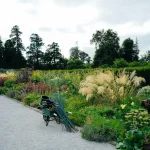
Avoid creating rigid height progressions where plants step down in perfect order from tall to short. Instead, let some medium-height plants occasionally interrupt the front edge, and allow low groundcovers to weave between taller specimens. This creates visual rhythm and prevents your garden from looking like stadium seating.
Texture Combinations That Create Depth and Interest
Texture differences between plants can make a small garden feel much larger and more complex than it actually is. The interplay between fine, medium, and coarse textures creates the visual depth that transforms a plant collection into a designed landscape.

Fine-textured plants have small, delicate leaves or needle-like foliage. Think of ornamental grasses like fountain grass, herbs like rosemary or lavender, or perennials with dissected foliage like yarrow. These plants recede visually, making spaces feel larger and creating a soft, hazy effect that works beautifully as a backdrop for bolder specimens.
Coarse-textured plants feature large, broad leaves or substantial, architectural forms. Hostas, elephant ears, big-leafed hydrangeas, and plants with dramatic seed heads like alliums fall into this category. These advance visually, drawing attention and creating focal points. The thick, waxy leaves of a mature hosta catch light differently than delicate grass blades, creating contrast that makes both plants more noticeable.
Medium textures bridge the gap between fine and coarse, including most common garden plants with moderate-sized leaves and typical growth habits. These workhorses—roses, most shrubs, standard perennials—provide continuity without overwhelming the design.
Successful texture combinations often pair opposites. Plant wispy, fine-textured ornamental grasses next to bold, broad-leafed perennials like bergenia. The contrast makes each plant’s characteristics more pronounced. Similarly, the feathery plumes of astilbe gain drama when planted near the solid, rounded forms of coral bells.
Consider how textures change seasonally. Deciduous trees with interesting bark provide coarse winter texture after their leaves drop, while ornamental grasses often become more prominent in fall and winter when other plants retreat. Plan for four-season texture interest by including evergreens with different needle types—short, dense spruce needles contrast beautifully with longer, looser pine needles.
Seasonal Height Progression for Year-Round Structure
A well-designed garden maintains visual balance throughout the growing season, accounting for how plants change size, shape, and prominence as months progress. Early spring gardens rely heavily on bulbs and low perennials, while late summer gardens showcase the full glory of ornamental grasses and tall perennials reaching their peak.

Spring structure comes primarily from woody plants—the bare branches of deciduous shrubs, evergreen conifers, and early-flowering trees. Bulbs provide temporary height with tulips reaching 18-24 inches (45-60cm) and crown imperial fritillarias towering at 3-4 feet (0.9-1.2m). Plan for these early height variations by positioning permanent structural plants where they’ll anchor spring compositions.
Summer brings explosive growth, with many perennials tripling in size from their spring emergence. Russian sage starts as 12-inch (30cm) clumps in May but reaches 4 feet (1.2m) by August. Plan spacing with mature sizes in mind, not spring emergence size. That innocent-looking astilbe will spread to 18 inches (45cm) wide and 2 feet (60cm) tall by midsummer.
Fall reveals the true backbone of your height strategy as annual flowers fade and perennial stalks become prominent. This is when ornamental grasses shine, providing substantial height and movement. Switchgrass reaches 6 feet (1.8m), while little bluestem creates 3-foot (0.9m) fountains of copper and orange. Leave these standing through winter for continued height interest.
Winter gardens depend entirely on permanent structure—evergreen trees and shrubs, interesting tree bark, and dried perennial stalks if you resist the urge to cut everything down in fall. Plan your evergreen placement carefully, as these plants provide your only reliable winter height in USDA zones 6 and colder.
Color Psychology and How It Affects Perceived Plant Size
Colors dramatically influence how large or small plants appear, and understanding these visual tricks helps you fine-tune your garden’s balance without changing actual plant sizes. Warm colors—reds, oranges, and yellows—advance visually and make plants appear larger and closer than they actually are. Cool colors—blues, purples, and greens—recede, making plants seem smaller and further away.

A red-flowering shrub like ‘Red Prince’ weigela appears more substantial than an identical blue-flowering specimen, even at the same mature size of 5 feet (1.5m). Use this principle strategically: place warm-colored plants where you want to create focal points or make small gardens feel fuller, and use cool colors to create depth and make spaces feel larger.
Light-colored flowers and variegated foliage also advance visually, while dark foliage recedes. White flowers on a medium-height plant can provide as much visual impact as a taller plant with purple blooms. This means you can create balance with shorter plants by choosing lighter colors, or tone down tall plants by selecting darker varieties.
Foliage color affects perceived size year-round, unlike flowers that provide temporary color bursts. Golden or chartreuse foliage advances dramatically—a 3-foot (0.9m) golden spirea appears much more prominent than the same plant in standard green. Dark purple or burgundy foliage recedes, allowing tall plants like purple-leafed sand cherry to provide height without overwhelming smaller companions.
The intensity of afternoon sunlight streaming through the chartreuse leaves of a Hakonechloa grass creates an almost luminous effect that draws the eye immediately, making this 18-inch (45cm) plant punch well above its weight class in garden compositions.
Consider bloom timing when planning color impact. A tree peony’s massive coral-pink flowers in late spring create enormous visual weight for three weeks, then fade to green background foliage. Plan supporting cast plants that can carry visual interest before and after these brief but dramatic color shows.
Regional Considerations: Matching Heights to Your Growing Zone
Plant heights vary significantly based on regional growing conditions, and successful garden design accounts for how your specific climate affects mature plant sizes. A plant that reaches 6 feet (1.8m) in the Pacific Northwest might struggle to achieve 4 feet (1.2m) in Zone 4 Minnesota, completely altering your planned height relationships.

In hot, humid Southern regions (Zones 8-10), many plants exceed their listed mature sizes. Ornamental grasses like fountain grass and Japanese forest grass grow larger and more vigorously than in cooler climates. Plan extra space and consider these plants as having greater visual weight in your compositions. Crape myrtles that remain shrub-sized in Zone 7 become substantial trees in Zone 9, requiring different placement strategies.
Cold climate gardeners (Zones 3-5) work with shorter growing seasons and plants that often stay smaller than catalog descriptions suggest. Many perennials that tower at 5 feet (1.5m) in temperate zones top out at 3 feet (0.9m) in short-season areas. This actually works to your advantage in small gardens, as you can achieve layered height effects with plants that won’t overwhelm limited space.
Coastal gardens deal with constant wind, which naturally keeps many plants shorter and more compact. Tall, narrow plants that work inland may require staking or simply grow in more rounded, wind-resistant forms. Plan for these natural modifications when designing height relationships.
High-altitude gardens above 7,000 feet (2,134m) experience intense UV light and temperature extremes that keep most plants compact and low-growing. Alpine gardening requires different height strategies, often focusing on groundcovers and low perennials rather than dramatic vertical elements.
Soil conditions also affect mature plant sizes within regions. Clay soil often restricts root growth, keeping plants smaller than they would grow in amended loam. Sandy soil may produce taller but less substantial plants. Consider your specific soil conditions when planning height progressions.
Common Design Mistakes and How to Fix Them
Even experienced gardeners fall into predictable height and texture traps that undermine their design goals. Recognizing these common mistakes helps you avoid them or correct existing problems without starting over completely.

The most frequent error involves planting everything at eye level—typically 3-4 feet (0.9-1.2m) tall. This creates a monotonous hedge effect where no individual plant stands out and the overall composition lacks drama. Fix this by adding at least one plant over 6 feet (1.8m) tall and several under 2 feet (0.6m) to break up the uniform height band.
Another common mistake is the “zoo exhibit” approach—placing the tallest plants in back, medium in middle, and shortest in front in rigid progression. Real landscapes have more complex height relationships. Allow some tall plants to come forward occasionally, and let groundcovers weave through the composition rather than staying confined to front edges.
New gardeners often underestimate mature plant sizes, creating overcrowded compositions where plants compete rather than complement each other. A 3-foot (0.9m) spacing between shrubs seems generous when planting 1-gallon containers, but creates problems when those shrubs reach their mature 6-foot (1.8m) spread. Research mature sizes carefully and plan accordingly, even if young plantings look sparse initially.
The opposite problem—overestimating space needs—leads to bare, disconnected-looking gardens where isolated plants fail to create cohesive compositions. Most perennials and small shrubs should have some visual overlap at maturity to create the layered, natural look that characterizes successful designs.
Texture mistakes include planting too many fine-textured plants together, creating a wimpy, indistinct mass, or combining only coarse textures, which can look heavy and overwhelming. Successful gardens need both texture extremes plus medium textures to bridge between them.
Seasonal planning mistakes involve creating designs that look great in May but fall apart by August, or gardens that provide no winter interest in cold climates. Always plan for four-season appeal, especially the structure that carries your design through dormant periods.

Cost Breakdown: Budget-Friendly Ways to Add Height and Texture
Creating dramatic height and texture combinations doesn’t require expensive specimen plants. Strategic plant selection and smart shopping can achieve professional-looking results on tight budgets.
Budget Options ($5-25 per plant):
Fast-growing annual vines provide instant height for minimal cost. Morning glories, cardinal climber, and hyacinth bean can reach 8-10 feet (2.4-3m) in one season on inexpensive trellises. Seeds cost $2-3 per packet and provide enough plants to cover substantial areas.
Perennial grasses offer excellent value, growing quickly from small divisions or 4-inch pots ($8-12) to substantial 4-6 foot (1.2-1.8m) specimens within two years. Switchgrass, fountain grass, and feather reed grass provide height, texture, and seasonal interest.
Common shrubs like forsythia, spirea, and weigela provide reliable height and texture for $15-25 per plant. Buy smaller sizes and allow extra growing time rather than purchasing expensive large specimens.
Mid-Range Options ($25-60 per plant):
Dwarf conifers provide permanent structure and interesting textures. Small specimens of blue spruce, dwarf pine, or compact juniper varieties cost $30-50 and grow into substantial focal points over 5-10 years.
Specialty perennials with interesting forms or extended bloom times justify slightly higher costs. Large hostas, ornamental onions, and architectural plants like yucca or ornamental rhubarb fall into this category.
Premium Options ($60+ per plant):
Specimen trees and large shrubs provide instant impact but require significant investment. A 6-foot (1.8m) ornamental tree costs $100-300 but immediately establishes your garden’s structure and mature feel.
Unusual or slow-growing specialty plants command premium prices. Japanese maples, dwarf conifers in larger sizes, and rare perennials may cost $75-150 but provide unique textures and forms unavailable in common plants.
Money-Saving Strategies:
Buy plants at season’s end when nurseries discount inventory 50% or more. Fall planting actually benefits most perennials and shrubs, giving them time to establish root systems before summer heat.

Start plants from seeds or cuttings when possible. Many tall perennials like black-eyed Susan and purple coneflower grow easily from seed, reaching blooming size in their second year for pennies per plant.
Join plant swaps and garden club exchanges to acquire unusual varieties without retail costs. Experienced gardeners often have divisions of expensive perennials available for trade or minimal cost.
Frequently Asked Questions
How do I fix a garden that looks flat without starting over completely?
Add vertical elements strategically throughout existing plantings. Install trellises with annual vines for immediate height, plant fast-growing ornamental grasses in key locations, and add a few taller perennials or shrubs to break up uniform heights. Focus on three or four strategic additions rather than replanting everything.
What’s the ideal ratio of tall to medium to short plants in a mixed border?
Aim for roughly 15% tall plants (over 4 feet/1.2m), 35% medium plants (2-4 feet/0.6-1.2m), and 50% shorter plants (under 2 feet/0.6m). This creates a stable foundation with enough height variation for visual interest. Adjust these percentages based on your space—small gardens can use fewer tall plants.
Can I create height and texture interest in a container garden on a small balcony?
Absolutely. Use tall containers of varying heights, add trellises or obelisks for climbing plants, and choose plants with dramatic upright growth habits like ornamental grasses or dwarf conifers. Layer plant heights within containers using the “thriller, filler, spiller” approach, with tall center plants, medium-height fillers, and trailing edge plants.
How do I prevent tall plants from overwhelming my small garden space?
Choose tall plants with narrow, upright growth habits rather than broad, spreading forms. Plants like columnar junipers, upright ornamental grasses, or fastigiate trees provide height without taking up excessive horizontal space. Also consider light-colored or fine-textured tall plants that don’t appear as visually heavy as dark, broad-leafed specimens.
When is the best time to evaluate and adjust my garden’s height and texture balance?
Late summer provides the best overview when most plants have reached peak size and ornamental grasses are approaching full height. Take photos from multiple angles and note areas that feel too heavy, too sparse, or monotonous. Plan changes for fall planting or early spring implementation when plants are dormant and easier to move.
Explore more
The Ultimate Companion Planting Cheat Sheet: 25 Proven Plant Pairings for Your Vegetable Garden
The Best Seeds for Direct Sowing: A Beginner’s Guide to Foolproof Varieties
Growing Squash: Tips for a Bountiful Harvest
📷 Featured image by Robin Wersich on Unsplash.