On this page
- What Organic Gardening Actually Means
- Start With Healthy Soil — Everything Else Follows
- Choosing Plants the Organic Way
- Natural Pest Control That Actually Works
- Managing Weeds and Watering Organically
- Composting, Crop Rotation, and Continuous Improvement
- Common Myths About Organic Gardening
- Frequently Asked Questions
- Starting Where You Are
Organic gardening sounds complicated until you realize it’s mostly a list of things you don’t do. You don’t spray synthetic pesticides. You don’t pour chemical fertilizers onto your plants. You don’t treat your soil like sterile dirt that exists only to hold roots up. What you do instead — feed the soil, choose plants that fit your climate, invite beneficial insects, deal with problems early — is what gardening used to be before the chemical aisle took over the garden center.
This guide covers what organic gardening actually means in practice, how to start an organic garden without buying a single specialty product, and why the organic approach tends to get easier year after year while conventional gardening tends to get harder. It’s not about perfection or purity. It’s about working with your garden as a living system instead of treating every problem with a spray bottle.

What Organic Gardening Actually Means
The word “organic” carries a lot of baggage. Commercial food labeling has given it a technical meaning involving certifications, approved input lists, and paperwork. For a home gardener, the concept is simpler and more useful: organic gardening means growing plants without synthetic pesticides, synthetic fertilizers, or synthetic herbicides, while actively building soil health and supporting the ecosystem around your garden.
Three shifts in thinking separate organic gardening from the chemical-dependent conventional approach most beginners encounter first.
You Feed the Soil, Not the Plant
Synthetic fertilizers feed plants directly — nitrogen, phosphorus, potassium dissolved in water, absorbed instantly by roots, producing fast visible growth. It works, but it bypasses the living soil entirely. Organic gardening takes the opposite approach: you build rich, biologically active soil full of compost, decomposing organic matter, fungi, bacteria, and earthworms, and the soil feeds your plants. It’s slower to show results, but the effects compound. A healthy organic garden soil keeps getting better; a chemically-fertilized soil usually gets worse.
You Prevent Problems Instead of Reacting to Them
Organic gardeners spend more time on prevention and less on intervention. Choose disease-resistant varieties, match plants to your climate, rotate crops each year, space plants for good air flow, encourage beneficial insects — and you’ll face a fraction of the pest and disease problems that conventional gardens fight with sprays every summer. When problems do appear, you address them early with the least-intensive tool that works: a blast of water, a hand-picked insect, a pruned diseased branch.
You Accept That Your Garden Is an Ecosystem
Every garden contains a community of insects, fungi, bacteria, birds, and other organisms. Conventional gardening often treats most of them as pests to be eliminated. Organic gardening recognizes that the vast majority are neutral or beneficial — pollinators, predators that eat pest insects, soil organisms that build fertility, decomposers that recycle organic matter. A pesticide that kills “bad bugs” almost always kills good bugs too, which tips the balance further toward pest outbreaks and deeper dependence on sprays.

Start With Healthy Soil — Everything Else Follows
If there’s one non-negotiable in organic gardening, it’s soil. Healthy soil grows healthy plants that resist pests and diseases, require less water, and produce better food. Poor soil produces stressed plants that become pest magnets. Every minute you invest in soil pays back for years. This is where most of your effort and most of your budget should go — not on bottles and bags of product applied to the plants themselves.
Compost Is the Foundation
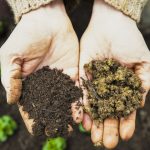
Compost — partially decomposed organic matter — is the single most important input in any organic garden. It feeds soil organisms, slowly releases nutrients, improves soil structure, holds moisture, and helps suppress disease. A garden that gets a one-to-two-inch layer of compost every spring, worked lightly into the surface or spread as mulch, will outperform the same garden relying on synthetic fertilizers within two or three years.
You can make your own compost from kitchen scraps, fallen leaves, grass clippings, and garden waste (a dedicated Soil & Composting guide covers this in depth). Or you can buy it — bagged compost from a quality local source, or bulk compost delivered by the yard if you have a big garden. Free municipal compost is available in many areas and is usually fine for ornamental beds, though the source matters for vegetable gardens. Homemade is cheapest and highest quality in the long run; bagged or bulk is a reasonable shortcut while you build your own system.
Mulch Everything
Organic mulches — shredded leaves, straw, wood chips, grass clippings, pine fines, compost itself — are the second foundation of organic gardening. A 2-to-3-inch layer on top of the soil suppresses weeds, retains moisture, moderates soil temperature, feeds the soil as it slowly decomposes, and protects the soil surface from compaction and erosion.
A consistently mulched garden needs dramatically less watering, less weeding, and less soil amendment than an exposed-soil garden. Organic gardeners often describe mulch as “the lazy gardener’s secret weapon” — and they’re right. Refresh mulch layers annually as old mulch breaks down into soil. Keep mulch a few inches away from plant stems and tree trunks to prevent rot.
Avoid the Tilling Trap
Rototilling feels productive but damages soil structure, destroys fungal networks, brings buried weed seeds to the surface, and sets back soil building by months. Modern organic gardening leans heavily on low-till or no-till approaches: you build beds by layering compost and mulch on top of the soil, and let soil organisms incorporate the organic matter naturally over time. Roots do the tilling. Worms do the mixing. Your job is to add material and stay out of the way.
For a new garden bed, a single initial loosening with a garden fork is usually all the soil disturbance you need — and even that is optional in many cases.
Choosing Plants the Organic Way
Half of organic gardening success comes from the plants you choose before you plant anything. The wrong plant in the wrong place will require chemical support to survive; the right plant in the right place will thrive on its own.

Match Plants to Your Climate
A plant that’s genuinely suited to your climate — your hardiness zone, your rainfall, your summer heat, your soil type — will fight off most pests and diseases with no help from you. A plant struggling in conditions it wasn’t built for will be stressed, and stressed plants are the ones pests attack. Work with your conditions, not against them. This is especially important for perennials and shrubs that will live in your garden for years.
Choose Disease-Resistant Varieties
Modern plant breeding has produced varieties of nearly every major vegetable, fruit, and ornamental with strong resistance to common diseases. Tomato varieties resistant to fusarium, verticillium, and nematodes. Apple varieties that shrug off scab and fire blight. Roses that don’t need constant fungicide sprays. These varieties look identical on the shelf to susceptible varieties — you’d never know the difference without reading the label or catalog description.
Look for abbreviations like VFN (resistance to verticillium, fusarium, and nematodes) on tomato labels, or words like “disease-resistant” or “multi-resistant” in variety descriptions. Choosing resistant varieties eliminates entire categories of problems before they start, and costs nothing extra.
Include Native Plants
Plants native to your region evolved alongside your local insects, fungi, soil, and weather. They typically need less water, less care, and no chemical inputs to thrive. They also support the local ecosystem in ways non-native ornamentals can’t — supporting native bees, butterflies, and birds that in turn help pollinate and protect your whole garden. You don’t need to go fully native. Mixing some native plants throughout your beds — coneflowers, black-eyed Susan, native milkweed, asters, native grasses — makes a significant difference both to the garden’s health and to local biodiversity.
Natural Pest Control That Actually Works
Pests are the single topic that drives most beginners toward chemical sprays. A few caterpillars on the kale, some aphids on the roses, a squash bug on the zucchini — and suddenly the organic resolve wavers. Here’s the truth: most pest problems in well-built organic gardens self-correct within a few weeks if you do nothing. And the tools that work don’t come in a bottle.

Invite Beneficial Insects
Every pest insect has predators. Aphids are eaten by ladybugs, lacewings, and tiny parasitic wasps. Caterpillars get picked off by birds and parasitized by wasps. Whiteflies and mites are devoured by predatory mites, ladybugs, and lacewings. Support these predators — which are already in your area, waiting for food and habitat — and they’ll do most of your pest control for you.
How to support them: plant flowers throughout your vegetable beds (not just in a separate border), especially small-flowered plants like dill, fennel, alyssum, cosmos, and yarrow that provide nectar and pollen to small beneficial insects. Leave some “wild” corners in your garden. Don’t be a perfectionist about fall cleanup — overwintering beneficials shelter in leaves and hollow stems. Most importantly: stop using broad-spectrum pesticides, even organic ones like spinosad or pyrethrin, which kill beneficials just as effectively as they kill pests.
Physical Barriers
Row covers (lightweight fabric draped over vegetable beds) block most insect pests from reaching plants in the first place. A row cover over a cabbage crop prevents cabbage moth damage. A row cover over new seedlings protects them from flea beetles. Collars around tomato stems stop cutworms. Bird netting over berries keeps birds out. Physical protection is nearly 100% effective, entirely non-toxic, and the first line of defense in serious organic gardens.
Handpicking and Hosing
For larger insects — tomato hornworms, Japanese beetles, squash bugs — handpicking works. Drop them in soapy water and move on. It’s unglamorous and effective. For soft-bodied pests like aphids, a strong blast of water from the hose knocks most of them off plants, and many don’t find their way back. These simple interventions sound almost embarrassingly low-tech, but they solve real problems with no collateral damage.
Targeted Organic Treatments (When Needed)
When prevention and simple interventions aren’t enough, organic gardening does have some targeted tools — but they’re genuine last resorts, used selectively on specific problems, not broad-spectrum preventatives.
- Insecticidal soap: Kills soft-bodied insects on contact (aphids, mites, whiteflies). Minimal residual effect. Best applied in evening. Harmful to beneficial insects it contacts, so spot-treat, don’t spray everywhere.
- Bacillus thuringiensis (Bt): A naturally occurring soil bacterium that specifically kills caterpillars. Harmless to everything else. Very effective on cabbage worms, tomato hornworms, and similar pests.
- Neem oil: A plant-derived oil that disrupts insect feeding and reproduction. Effective against a wide range of pests but also affects beneficial insects. Use sparingly.
- Diatomaceous earth: A fine powder that damages soft-bodied insects’ exoskeletons. Works when dry; useless when wet. Useful for slugs around specific plants.
Even these organic tools should be a second or third response, not a first. A garden that relies heavily on any of them — even the certified-organic ones — is usually missing something more fundamental: weak soil, wrong plant choices, poor air circulation, absent pollinators and predators.

Managing Weeds and Watering Organically
Weeds are usually the second most-cited reason gardeners reach for chemicals. Herbicides offer the illusion of a permanent fix, but they damage soil biology, create runoff issues, and don’t address the reason weeds appeared in the first place. Organic weed management is different — more gradual, but more durable.
Mulch Is Your First Weed Tool
A thick layer of organic mulch prevents 80–90% of weed germination simply by blocking light from reaching the soil surface. The few weeds that do come through are easier to pull because the mulched soil stays loose and moist. Consistent mulching year after year dramatically reduces the weed seed bank in your soil. After three or four seasons of mulching, many organic gardeners spend less than an hour a week total on weeding — compared to the constant war of an exposed-soil garden.
Pull Young, Pull Shallow
The best time to pull a weed is when it’s small. A weed with three true leaves comes out with a single pull and no soil disturbance. The same weed a month later, with a six-inch taproot, means digging that disturbs surrounding plants and brings more weed seeds to the surface. Brief daily or weekly weeding sessions keep the job manageable. Long seasonal “weed wars” after things get out of hand are miserable and often counterproductive.
Organic Watering Principles
Watering organically means watering deeply, infrequently, and at the base of plants. Deep weekly watering (rather than daily shallow sprinkling) encourages roots to grow down into the soil where they’re more resilient in drought. Watering at the base of plants rather than over their leaves keeps foliage dry — and dry foliage is less prone to fungal diseases that would otherwise tempt you toward fungicides.
Drip irrigation or soaker hoses are organic gardeners’ best friends. They deliver water directly to the root zone, reduce waste, and keep foliage dry. A simple drip system on a timer transforms garden maintenance.
Composting, Crop Rotation, and Continuous Improvement
Two practices separate casual organic gardeners from ones whose gardens get dramatically better year after year: composting seriously, and rotating crops.
Starting a Compost System
You don’t need a fancy composter. A three-foot-square pile in a back corner, a pair of stacked wooden pallets, or a simple wire bin all work fine. Add kitchen scraps (vegetable peels, coffee grounds, eggshells, no meat or dairy), fallen leaves, grass clippings, and garden trimmings. Keep the pile moist but not wet. Turn it occasionally if you want faster results; leave it alone if you don’t mind waiting longer.
In six to twelve months, the bottom of the pile becomes dark, crumbly, sweet-smelling compost — some of the most valuable material a garden can get, made from stuff that would otherwise be trash. Add that compost to your beds each spring, and your soil gets steadily richer.

Crop Rotation in the Vegetable Garden
Growing the same crop in the same spot year after year depletes specific nutrients and concentrates the pests and diseases that target that crop. Rotating crops by family breaks this cycle. The simplest rotation for home gardens divides vegetables into three or four groups and moves them around the beds each year.
A basic four-group rotation:
- Leafy greens and brassicas: lettuce, spinach, kale, broccoli, cabbage
- Fruiting crops: tomatoes, peppers, eggplant, squash, cucumbers
- Root crops: carrots, beets, onions, potatoes
- Legumes: beans, peas (these add nitrogen back to the soil)
Move each group to a different bed each year, cycling through so no group is in the same spot more often than every three or four years. Even an imperfect rotation makes a real difference to soil health and pest pressure.
Common Myths About Organic Gardening
Organic gardening attracts a lot of well-meaning misinformation. Some widely-repeated claims are misleading, outdated, or just wrong. A few worth addressing before they waste your time.
- “Organic always means safe.” Some organic treatments are quite toxic — pyrethrin, rotenone, and copper fungicides all have real environmental and human-health impacts despite being “natural.” Organic doesn’t mean no impact; it means different tradeoffs. Use even organic products carefully and selectively.
- “Organic gardens produce less.” Well-managed organic vegetable gardens routinely produce yields comparable to conventional gardens. Large-scale commercial agriculture is a different story, but at home-garden scale, organic yields are typically competitive within a season or two of establishing the system.
- “Companion planting solves most pest problems.” Some companion planting effects are real (marigolds do seem to deter some nematodes; alliums repel some pests). But many specific companion-planting claims are folklore without scientific backing. Diverse plantings, healthy soil, and supporting beneficials matter far more than specific plant pairings.
- “You need to buy organic-certified inputs.” Home gardeners aren’t bound by commercial certification rules. Your neighbor’s leaf pile, your own kitchen compost, and the mulch from a local arborist all work beautifully without any certification.
- “Organic gardens are harder than conventional ones.” In the first year or two, sometimes — you’re building soil and establishing systems. After that, organic gardens often require less work, not more, because pests are moderated, weeds are suppressed, and soil is self-improving.
Frequently Asked Questions

Can I convert an existing conventional garden to organic?
Yes, though it takes time. The first year is the hardest — soil biology that’s been depleted by chemical inputs takes a season or two to rebuild, and pest populations that were kept in check by sprays may briefly spike before beneficial insect populations recover. By year two or three, most gardens convert successfully and often perform better than they did conventionally. Start by stopping synthetic inputs, adding compost and mulch generously, and planting flowers to attract beneficials. The garden takes care of the rest over time.
Is organic gardening more expensive?
Upfront, sometimes — organic seed, quality compost, and row cover fabric all cost money. Long-term, usually less — you’re not buying fertilizer every month or pesticides every summer, and home composting turns your waste into your most valuable soil input. The biggest ongoing cost in most organic gardens is mulch, which is often free or very cheap from local sources.
What should I do if I have a serious pest outbreak?
First, identify the pest accurately — some “outbreaks” are actually beneficial insects, and misidentification leads to wiping out your helpers. Second, consider whether the damage is actually significant; many pest presences are tolerable and resolve naturally. Third, start with the least-intensive control (handpicking, hosing off, row cover) before escalating. Reserve targeted organic treatments like Bt or insecticidal soap for genuine emergencies where simpler methods aren’t working, and apply them precisely to affected plants rather than as a broad-spectrum spray.
Do I need a big yard to garden organically?
Not at all. Container gardens, raised beds, balcony gardens, and small urban plots all lend themselves beautifully to organic methods. In fact, smaller gardens are often easier to manage organically because you can give each plant personal attention. A single 4×8 raised bed with good soil and thoughtful plant choices produces a remarkable amount of organic food.
What’s the single most important thing I can do to start?
Stop using synthetic fertilizers and pesticides, and start adding compost and mulch. That’s it. Everything else — crop rotation, companion planting, beneficial insect habitat — builds on that foundation. If you do only those two things consistently for two seasons, your garden will look and behave completely differently by year three.
Starting Where You Are
Organic gardening isn’t a test you pass or fail. It’s a direction you move in, one decision at a time. You don’t need to convert your whole approach at once. You can compost this year and phase out synthetic fertilizer next year. You can try row covers on one crop and see how it goes. You can plant a few more flowers among the vegetables and notice, a month later, that you’re seeing more ladybugs and fewer aphids.
The shift is gradual, but the payoff accumulates. A garden managed organically for five years is a different place than a garden managed with chemicals for the same period. The soil is darker and richer. The insect life is more varied. The plants look healthier with less intervention. You spend less time spraying, pulling weeds, and solving problems — and more time actually gardening.
Start with whatever seems easiest. Add compost. Mulch generously. Plant some flowers alongside your vegetables. Skip one round of fertilizer or one scheduled spray and see what happens. Each small decision moves the garden in the same direction — toward a system that mostly runs itself, that produces more food and more beauty with less effort, and that gives you back something a little like what gardens used to be before we started trying to win the fight against nature instead of partnering with it.
📷 Featured image by Frank Thiemonge on Unsplash